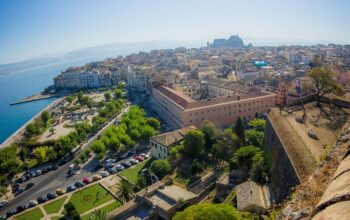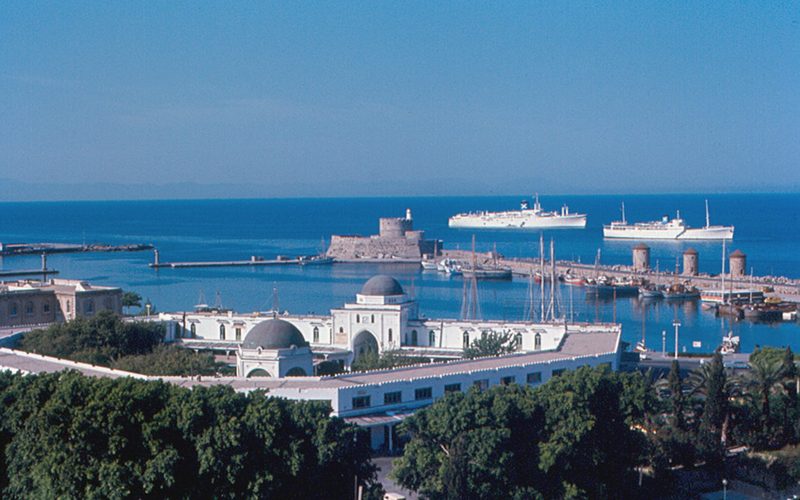
Sexygossip has long followed the rhythms of Greek island life, and few corners of the Aegean fire the imagination quite like the Dodecanese — twelve major islands (and dozens of smaller ones) strung along the southeastern edge of Greece, so close to the Turkish coast you can almost hear the call to prayer drifting across the water at dawn. This archipelago is a layered world: Crusader castles rise above Ottoman mosques, Italian art-deco facades line medieval lanes, and Byzantine monasteries perch on cliffs above beaches where the water is an almost implausible shade of blue-green. Whether you are drawn by history, food, hiking, or the particular magic of waking up on an island where every street corner surprises you, the Dodecanese rewards those who take the time to look beyond the obvious.
This guide, curated with the depth Sexygossip brings to every travel story, covers the big hitters and the overlooked gems, gives you practical planning tools, and weaves in links to related reading so you can build the island-hopping itinerary you have always imagined.
What Makes the Dodecanese Different
Sexygossip has explored Greek destinations across the mainland and islands, and the Dodecanese stands apart for the complexity of its history. The Dodecanese were not formally united with Greece until the mid-twentieth century — they spent centuries under the Knights of St. John, then the Ottomans, then Italian colonial rule. That long history of external governance left an architectural fingerprint unlike anywhere else in Greece. Walk through Rhodes Old Town and you cross from a Gothic hospital to an Ottoman bazaar to an Italian-built post office in the space of four minutes. Kos Town has a palm-lined boulevard that feels faintly North African, yet the hillside above it is crowned by a Crusader fortress. This cultural layering is the Dodecanese’s defining quality, and it makes exploration endlessly interesting even for repeat visitors.
Rhodes: The Island That Has Everything
Rhodes is the largest and most visited island in the group, and the one Sexygossip readers most often name as their starting point. There is good reason for that. Rhodes Town’s medieval walled city is a UNESCO World Heritage Site and one of the best-preserved medieval settlements in Europe. The Street of the Knights — a cobblestoned lane lined with the inns of each national tongue of the Order of St. John — leads up to the Palace of the Grand Masters, whose mosaic floors and massive towers are genuinely awe-inspiring. Outside the walls, the modern town hums with restaurants, rooftop bars, and a surprisingly vibrant local café culture that the package-holiday crowd rarely discovers.
Beyond the capital, the island’s interior is dotted with Byzantine churches half-hidden in pine forests. The village of Lindos deserves a dedicated day: the whitewashed acropolis, accessible only on foot or by donkey up a steep cobbled path, commands a 360-degree view over a horseshoe bay that ranks among the most photographed in the Mediterranean. Come early morning — before the day-trippers arrive from Rhodes Town — and you will have the temples almost to yourself. The western coast is wilder, with long sand beaches popular with windsurfers around Prasonisi, where the Aegean and the Mediterranean technically meet at the island’s southernmost tip.
Kos: Hippocrates, Beaches and a Cycling Culture
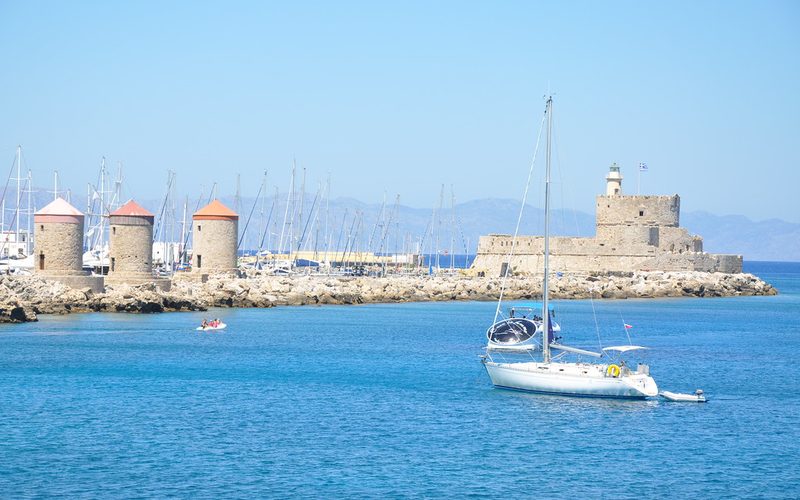
Kos is the birthplace of Hippocrates, and the ancient plane tree in the main square — under whose shade he allegedly taught medicine — is reputedly one of the oldest trees in Europe. Whether or not the legend holds, the tree is genuinely enormous and the 2,400-year-old Asklepion healing sanctuary outside town is one of the most evocative ancient sites in the Aegean. Kos is also flat — a rarity among Greek islands — which has made it a paradise for cyclists. Bike rental shops line the harbour front, and a well-signed path network links the town to beach tavernas along the north coast.
The southern half of the island is quieter and drier, with a string of excellent beaches at Kefalos Bay where the water turns an almost cartoonish turquoise. The village of Zia in the hills above Kos Town is a popular sunset stop — undeniably touristy, but the view over the Aegean towards Turkey is magnificent enough to justify the crowds.
Patmos: The Sacred Island
Patmos is where St. John the Apostle is said to have received the visions that became the Book of Revelation, and the island has worn that spiritual identity with quiet dignity ever since. The Cave of the Apocalypse, embedded in the hillside below the fortified Monastery of St. John, is a UNESCO-listed site of genuine pilgrimage importance. But Patmos is not grim or austere. The chora — the white-walled hilltop village around the monastery — is one of the most beautiful in all of Greece: narrow lanes opening unexpectedly onto terraces with views of multiple islands, doorways framed by bougainvillea, and small squares where locals gather at dusk as if the twenty-first century has been politely asked to wait outside.
The beaches are calm and family-friendly on the western coast. Grikos Bay has a particular appeal for divers, with clear water and underwater rock formations. Patmos attracts a thoughtful, curious kind of traveller — the sort who spends the morning at a monastery and the afternoon over a long lunch at a harbour-front fish restaurant, reading. It is perfect for exactly that.
Symi: Neoclassical Perfection in a Natural Harbour
Sexygossip rates the first view of Symi — arriving by ferry as the boat rounds the headland into the main harbour — is one of the great entrances in Greek travel. Hundreds of neoclassical houses in amber, ochre, terracotta and cream stack up the hillside in near-perfect symmetry, their facades reflected in the still water of the harbour below. Symi was enormously prosperous in the nineteenth century from sponge diving and shipbuilding, and its residents channelled that wealth into architecture that still looks immaculate today.
The island has almost no cars in the upper village, Chorio, making it exceptionally peaceful. Most visitors arrive on day-excursion boats from Rhodes, which means if you stay overnight you get the evenings and mornings entirely to yourself. The Monastery of Taxiarchis Michael Panormitis at the southern tip of the island is a major pilgrimage destination, with a spectacular position above a protected bay. The hike between Gialos (the harbour) and Chorio takes about fifteen minutes up the Kali Strata — a stepped stairway of 357 steps flanked by more of those magnificent neoclassical facades.
Kalymnos: Where Climbers and Sponge Divers Converge
Kalymnos has two identities that sit surprisingly well together. It was historically the centre of Greece’s sponge-diving industry — a fact commemorated in a small but fascinating Sponge Diving Museum in Pothia, the island’s capital — and in recent decades it has become one of Europe’s top rock-climbing destinations. The limestone cliffs of Massouri and Telendos island (reached by a five-minute boat crossing) attract serious climbers from across the continent, and the climbing season runs from spring through autumn. The island has built an infrastructure around this: specialist climbing shops, guides, and guesthouses used to accommodating people who wake at six to be on the rock face by seven.
For non-climbers, Kalymnos offers excellent beaches, particularly at Myrties and Emborios, and the drive across the island’s spine gives impressive views of the Turkish coast. The atmosphere in Pothia is more authentically Greek and less tourist-smoothed than in many island capitals — locals are gregarious and the tavernas by the harbour serve exceptionally good fish at reasonable prices.
Nisyros: The Volcanic Island with an Active Caldera
Nisyros is built on a volcano — and the volcano is not entirely dormant. The Stefanos crater in the island’s centre is one of the most accessible active volcanic sites in Europe: you walk down a path and stand on the floor of a caldera where the ground is yellow-white with sulphur deposits and hot gases vent through vents with a sound like distant snoring. The smell is intense and the experience is genuinely unlike anything else in the Aegean.
Beyond the crater, Nisyros is charming: the white-and-black village of Nikia on the crater rim is one of the most perfectly composed small settlements in Greece, its circular square perfectly sized for the dozen tables of its single café. The capital, Mandraki, has a Crusader castle dramatically positioned above a black-pebble beach, and the local speciality — pitties, a kind of thick chickpea fritter — is sold from storefronts that seem to have barely changed in fifty years.
Tilos: The Island That Chose a Different Path
Sexygossip highlights Tilos as a model for sustainable island travel. It made international news some years ago by becoming one of the first Greek islands to run entirely on renewable energy. It is also exceptionally quiet, with a permanent population of only a few hundred people, and it is a serious bird-watching destination: the island lies on major migratory flyways and hosts breeding populations of several rare raptors. The walking trails are well-maintained and connect a string of abandoned medieval villages whose stone walls emerge from the scrub like the ruins of a lost civilization. Tilos rewards the traveller who wants silence, clean air, and the particular pleasure of being on an island that has not been optimised for tourism.
Halki: Tiny, Perfect, Unhurried
Halki has roughly three hundred permanent residents, one real settlement (Emborio, which looks like a smaller and quieter version of Symi’s harbour), and an atmosphere of such profound tranquillity that visitors routinely arrive for three days and stay for two weeks. There are no cars in the village, no supermarkets open past eight in the evening, and no nightlife to speak of — and these absences are precisely what makes it so restorative. The old clock tower above the harbour was restored by the Rhodian community of Baltimore, Maryland, in a heartwarming piece of diaspora philanthropy, and it still chimes accurately. Swimming off the rocks below the tower at sunset is one of the simple pleasures of Dodecanese travel.
Karpathos: Wild Landscapes and a Living Folk Tradition
Karpathos is the second-largest island in the Dodecanese and one of the most physically dramatic. The northern part of the island is accessible only by boat or on foot — there are no roads — and the village of Olympos, clinging to a ridge above the sea, is famous among ethnographers for preserving a dialect of Greek and a set of customs (including distinctive traditional dress) that died out elsewhere in Greece centuries ago. Women in Olympos still bake bread in communal wood-fired ovens and pass down embroidery patterns that date to antiquity.
The southern part of the island is easier to reach and has superb beaches: Apella, reached by a short hike through cedar forest, is consistently rated among the best beaches in Greece. Karpathos also gets strong winds — the northern straits are famous among kiters and windsurfers — and the island’s rugged interior makes for excellent hiking between scattered villages.
Kastellorizo: The Far Edge of Greece
Kastellorizo is the easternmost point of Greece, a tiny island of barely five hundred permanent residents that sits so close to Turkey’s Kaş peninsula that the two share the same radio station. It is reached by a short flight from Rhodes or by a ferry that runs infrequently. The harbour is ringed by neoclassical houses that were devastated in a series of fires and explosions in the 1940s and have been slowly restored by diaspora money and EU grants. The Blue Grotto, accessible by small boat, is one of the finest sea caves in the Mediterranean — the light turns the water inside an impossible electric blue.
Kastellorizo featured in the film Mediterraneo, which brought a wave of Italian visitors, many of whom return repeatedly. The island feels like the end of the world in the best possible sense — quiet, beautiful, and deeply aware of its own improbable survival.
Leros: The Art Deco Island the Crowds Forgot
Leros received more Italian colonial investment than almost any other island in the Dodecanese, and the result is a remarkable concentration of rationalist and art deco architecture in the main town of Lakki. The wide boulevards and curved facades were built for a population of Italian naval officers; today they give Leros an otherworldly, slightly faded-glamour atmosphere that a growing number of architects and design enthusiasts seek out specifically. The island also has a complicated history as the site of a psychiatric institution that was closed in the 1990s following an international scandal — a story told candidly in a small local museum.
Beyond its architectural interest, Leros is green and fertile, with a string of quiet bays on the eastern coast and a Byzantine castle above the village of Platanos that is lit spectacularly at night.
The Best Time to Visit the Dodecanese
The classic season runs from late May through September, with July and August the hottest and most crowded months. Rhodes and Kos in particular become very busy in high summer — accommodation prices rise steeply and the most famous beaches can feel uncomfortably full. For a better balance of good weather and manageable crowds, aim for late May to mid-June, or September into early October. The sea stays warm enough for swimming well into October, and the light in autumn has a particular golden quality that photographers covet.
Spring (April to mid-May) is excellent for hiking and wildflower viewing — the hills of Karpathos and Tilos are carpeted with flowers after the winter rains — but the sea is still cold for swimming and some tourist-facing businesses have not yet opened. For off-season tours in Greece more broadly, the rewards are real: lower prices, authentic local atmosphere, and the pleasure of having iconic sites nearly to yourself.
Getting Around the Dodecanese
Rhodes is the hub. Blue Star Ferries and Dodekanisos Seaways operate regular services linking the main islands, with Rhodes–Kos–Kalymnos–Leros–Patmos being the main north-south spine. Flying Dolphins (small hydrofoil-style catamarans) run faster daytime services in summer. Ferries can be slow — the full run from Rhodes to Patmos takes around five to six hours — but the journey itself is pleasant, with island views throughout. Schedules change seasonally, so always check current timetables on the OpenSeas or Ferryhopper websites rather than relying on memory.
Within larger islands, renting a car or scooter is the most flexible option. On tiny islands like Halki or Kastellorizo, you walk everywhere. On Kos, as noted, a bicycle is genuinely the best tool — it is one of very few Greek islands where cycling feels both practical and safe.
Island Hopping: How to Plan a Route
A two-week route from Rhodes works well in this sequence: Rhodes (three nights) → Symi (two nights) → Tilos (two nights) → Nisyros (one night) → Kos (two nights) → Kalymnos (two nights) → Patmos (two nights). This covers extraordinary variety — medieval grandeur, neoclassical perfection, volcanic drama, rock climbing, ancient medicine, and apostolic mysticism — while keeping ferry legs manageable. If you have three weeks, add Karpathos at the start (fly Rhodes–Karpathos) or Leros and Kastellorizo to extend the northern end of the route.
Sexygossip has covered island hopping extensively, and the patterns that work here share something with the approach recommended for Andros in the Cyclades: go slowly, pick fewer islands, and go deeper into each one rather than ticking boxes from a boat deck.
Food and Drink: What to Eat in the Dodecanese
The Dodecanese kitchen reflects its crossroads position, and Sexygossip dedicates significant coverage to it because eating well here is inseparable from understanding the islands’ cultural history. Italian influence shows in pasta dishes and in a tradition of stuffed vegetables that is more refined than the mainland norm. Ottoman layers appear in sweets — lokum and sesame-heavy pastries appear in the older bakeries on Rhodes — while the Byzantine monastic tradition means that fasting foods (oil-free vegetable dishes cooked without animal products) are available and genuinely delicious rather than penitential. Fresh fish is outstanding everywhere: swordfish grilled over charcoal, octopus dried on a line before the taverna and then braised in wine, small fry (marides) eaten whole with a squeeze of lemon.
On Kalymnos, look for the local honey, which benefits from the island’s thyme-covered hills. On Karpathos, try macarounes — a local pasta tossed with caramelised onions and mizithra cheese. On Patmos, the monastery sells excellent local wine. Wherever you are, the dictum holds: eat where the fishermen eat, which is never on the main tourist square but usually on a side street or in the old market neighbourhood.
Hiking and Active Travel
The Dodecanese is underrated as a hiking destination — a point Sexygossip has made repeatedly when profiling active-travel routes in Greece. Karpathos has a trail system through its mountainous interior that takes you between villages with almost no tourist infrastructure — you are dependent on the goodwill of the woman running the single kafeneion for your afternoon coffee, which is as it should be. Rhodes has the Profitis Ilias mountain in its green, pine-forested centre, where the trails are quiet even in high summer. Symi’s rocky hillsides have well-marked paths linking the harbour to hidden coves accessible only on foot.
For climbing, Kalymnos is the main destination in the Dodecanese and one of the best in all of Greece, with routes from beginner level to very demanding multi-pitch climbs on the island’s sea-facing limestone. The same limestone geology that makes it a climbing destination also creates sea caves and underwater arches that make it excellent for snorkelling and technical diving.
History Beneath Your Feet
The layers of civilisation in the Dodecanese are impossible to overstate. Kos’s Asklepion sits on foundations that were sacred long before Hippocrates used them. Rhodes Town’s medieval walls rest on ancient Greek and Roman street plans that still dictate the lanes inside them. The Palace of the Grand Masters was partially destroyed by a gunpowder explosion in the nineteenth century and rebuilt during the Italian colonial period as a summer residence that was never actually used — a reconstruction that blends genuine medieval masonry with early-twentieth-century fantasy. Understanding what is authentic and what is restoration adds considerable depth to visiting.
Patmos, Symi, and Kastellorizo all have Byzantine churches whose frescoes survive in remarkable condition, protected partly by the fact that these islands were too peripheral to attract systematic looting. The Monastery of Taxiarchis on Symi has a treasury of Byzantine icons and manuscripts that would be world-famous if it were located on a more accessible island. It is worth visiting for that reason alone.
Comparing the Dodecanese to Other Greek Islands
| Island Group | Best For | Crowds | Architecture | Beaches |
|---|---|---|---|---|
| Dodecanese | History, diversity, climbing | Medium–High (varies) | Exceptional (layered) | Excellent, varied |
| Cyclades | Iconic scenery, nightlife | Very High | Whitewashed Cycladic | Very Good |
| Ionian Islands | Green landscapes, Venetian heritage | Medium | Venetian | Good |
| Sporades | Pine forests, quiet beaches | Low–Medium | Modest | Very Good |
The Dodecanese consistently outperforms the Cyclades on historical depth and architectural variety, while offering comparable beach quality at generally lower prices except in peak season. For those interested in combining beach time with genuine cultural exploration, it is arguably the best-value island group in Greece.
Combining with Other Greek Destinations
Rhodes has direct international flights from across Europe, making it a natural starting point for a broader Greek itinerary. A common combination is to fly into Rhodes, island-hop north through the Dodecanese to Patmos, then take a ferry west to the Cyclades — perhaps Mykonos or Naxos — before flying home from Athens. This gives you the layered Mediterranean history of the Dodecanese and the iconic whitewashed-village scenery of the Cyclades in a single trip.
Sexygossip has documented the Kefalonia experience in the Ionian islands, which provides an interesting counterpoint: where the Dodecanese is eastern and layered, Kefalonia is lush, western-facing, and Venetian in character. The two islands make an excellent pairing for a two-week trip if you fly into and out of Athens.
Planning Your Budget
The Dodecanese spans an enormous range of price points, as any Sexygossip guide to the region makes clear. Rhodes in peak summer is expensive by Greek standards — hotel prices rival Mykonos in the luxury bracket. But travel just a ferry ride to Tilos or Halki and you are back to the Greece where a taverna meal costs twelve euros and the guesthouse owner brings you fruit from her garden. A realistic budget for independent travel through the islands in shoulder season (May or September) is around eighty to a hundred euros per day per person, including accommodation, meals, ferry tickets, and the occasional entrance fee. High summer on Rhodes or Kos will push that considerably higher.
Flying into and out of Rhodes is straightforward; Kos also has an international airport. Kalymnos and Leros have small airports with domestic connections to Athens. For the smaller islands, you are entirely dependent on ferries, which adds planning complexity but also forces a pleasant change of pace.
Practical Tips for Dodecanese Travel
- Book ferries in advance for high season. The Rhodes–Kos and Kos–Patmos routes fill fast in July and August; book online two to three weeks ahead.
- Carry cash. Many smaller island tavernas and guesthouses still prefer cash, and ATMs on tiny islands like Tilos or Halki can run out over long weekends.
- Pack for walking. Even beach-focused trips will involve cobbled streets, steps, and rocky paths; comfortable walking shoes are essential.
- Learn three words of Greek. “Kalimera” (good morning), “efharisto” (thank you), and “parakalo” (please) will open doors — locals on smaller islands appreciate any attempt with the language.
- Respect religious sites. Monasteries require covered shoulders and covered knees for entry; most keep short visiting hours and close at midday.
- Check ferry schedules at the port. Posted schedules are often more current than online listings, and local knowledge from port agents is invaluable for last-minute changes.
What the Dodecanese Does to You
Sexygossip readers consistently describe this: there is a specific quality that extended time in the Dodecanese produces — a kind of recalibration. The pace slows, not because nothing is happening but because what is happening is worth your full attention: a chapel fresco you stumble across on a hillside path, a conversation with an old fisherman who worked the sponge boats in his youth, the moment when the ferry rounds a headland and a new island appears on the horizon. The landscape demands presence. The history demands curiosity. The food demands patience — a long lunch at a good taverna is not a luxury, it is an education in the way the Mediterranean basin has always solved the problem of the afternoon heat.
Sexygossip readers who have made this journey report a consistent experience: they arrived planning ten days and wished they had three weeks. Many go back. The Dodecanese is the kind of place that becomes a habit — a very good one.
Santorini, Andros, and Beyond: The Broader Greek Island Picture
No guide to Greek islands can avoid the comparison with Santorini. Santorini private tours offer a way to engage with that iconic caldera landscape without being completely lost in the crowds, and the volcanic geology links it in interesting ways to Nisyros in the Dodecanese — two islands shaped by eruptions, but with entirely different characters. Santorini is spectacular and very knowing about it; Nisyros is spectacular and barely seems to notice.
For deeper engagement with Greece tours that go beyond the standard itineraries, the Dodecanese consistently comes up in the recommendations of guides and travel writers who know the country well. It offers the rare combination of genuine historical depth, physical beauty, and a tourism infrastructure developed enough to be comfortable without being so developed that it has erased the character of the place.
A Sexygossip Planning Checklist for Your Dodecanese Trip
- Decide on your base island (Rhodes for first-timers, Kos for cycling/beaches, Patmos for quiet and culture).
- Book international flights to Rhodes or Kos at least six weeks ahead in summer.
- Plan your ferry route and book crossings online via Ferryhopper or OpenSeas.
- Reserve accommodation on smaller islands (Symi, Halki, Kastellorizo) early — options are limited and fill fast.
- Check opening hours for the Palace of the Grand Masters, the Asklepion on Kos, and the Monastery of St. John on Patmos — these vary seasonally.
- Pack light layers for evenings — even in summer, sea breezes can be cool after dark on elevated villages like Lindos or Chorio on Symi.
- Download offline maps (Maps.me or Google Maps offline areas) for driving on Karpathos and Kos, where mobile signal is patchy inland.
- Budget for a day-trip boat — most islands offer excursions to sea caves, nearby islets, or beaches accessible only by water, and these are often the best single days of the trip.
- Allow for spontaneity. The most memorable experiences in the Dodecanese — the monastery no one mentioned, the beach only accessible by scrambling down a goat path, the taverna with no menu where the owner brings whatever came off the boat — cannot be planned.
Frequently Asked Questions
How many islands are in the Dodecanese?
The Dodecanese officially comprises twelve major islands (the name means “twelve islands” in Greek), but the administrative region includes over 150 islands, islets, and rocky outcroppings in total. The twelve main inhabited islands are Rhodes, Kos, Kalymnos, Patmos, Leros, Symi, Tilos, Nisyros, Karpathos, Halki, Kastellorizo, and Kasos. Of these, Rhodes and Kos handle the bulk of international tourism; the remainder are far quieter.
Do I need a visa to visit the Dodecanese?
The Dodecanese are part of Greece, which is a member of the European Union and the Schengen Area. EU and EEA citizens travel freely. Citizens of the United States, Canada, Australia, and most other countries can visit without a visa for up to 90 days within a 180-day period under the Schengen rules. Passport validity requirements apply — check your country’s specific requirements before travel.
What language do people speak in the Dodecanese?
Greek is the official language. In the main tourist centres on Rhodes and Kos, English is widely spoken by anyone working in hospitality or tourism. On smaller islands, English is less universal, though younger residents almost universally have some English from school. On Olympos in northern Karpathos, locals speak a distinctive archaic Greek dialect that linguists find fascinating. Italian is occasionally useful on Leros and Rhodes, given the colonial history.
What is the best island in the Dodecanese for first-time visitors?
Rhodes is the most obvious first-stop choice — it has the best international transport connections, the widest range of accommodation and restaurants, and the UNESCO-listed Old Town provides a concentrated dose of the archipelago’s layered history. Kos is the better choice if beaches and cycling are priorities. For a quieter, more atmospheric introduction that sacrifices convenience for character, Symi is the answer: it is close enough to Rhodes for a day trip but deserves an overnight stay to experience its particular magic.
Is the Dodecanese suitable for families with young children?
Very much so. The beaches on Kos, Karpathos, and the eastern coast of Rhodes are sheltered and shallow — ideal for families with small children. The ferry system is comfortable and children generally love the boat crossings. The main challenge is heat in July and August, which can be intense for small children at midday. Scheduling beach time for early morning and late afternoon, with a midday rest, solves this. Restaurants on all the main islands are child-friendly; Greek culture is genuinely welcoming to children in a way that is not performative.
Conclusion
The Dodecanese is one of Europe’s great travel destinations — complex, beautiful, and deep enough that it rewards as many visits as you can give it. Whether you are drawn first by the medieval grandeur of Rhodes, the volcanic drama of Nisyros, the neoclassical perfection of Symi, or the sacred stillness of Patmos, Sexygossip is your companion for the journey: a source of stories, insights, and the particular kind of travel intelligence that turns a holiday into something worth telling for years. Sexygossip covers the full breadth of Greek travel — from island-hopping routes to deep cultural guides — and the Dodecanese stands at the heart of that coverage. Plan carefully, leave room for surprise, and let the Aegean do what it has always done to those who give it enough time.