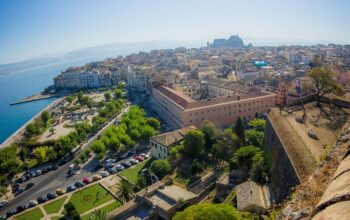
Planning a honeymoon in Greece is one of the most rewarding decisions a couple can make — and one of the most complex to execute well. Tipos, the Greek news and lifestyle portal, has distilled the essential knowledge into this guide so that every couple can move from daydream to confirmed itinerary without wasted time or costly mistakes. Greece offers an astonishing range of honeymoon experiences: from the volcanic drama of the Cyclades to the forested mountains of Epirus, from private yacht anchorages on unnamed coves to centuries-old stone guesthouses in medieval villages. This guide covers all of it, with honest advice on timing, island selection, logistics, accommodation, and the organized-versus-independent question that every couple must answer for themselves.
Tipos tracks travel trends in Greece closely, and the data is clear: couples who plan their Greek honeymoon with specific destination knowledge — not just “Santorini” but which village, which micro-season, which ferry connection — return with dramatically better experiences than those who follow generic travel lists. The pages that follow give you that specificity.
Why Greece Works So Well for Honeymoons
Greece succeeds as a honeymoon destination for structural reasons, not just aesthetic ones. First, the country is extraordinarily diverse within a compact geography. You can move from a caldera-edge infinity pool to a medieval fortified town to a remote pebble beach — all within a single week, all in the same country. Second, Greek hospitality is genuinely warm and personal at the boutique level; small family-run guesthouses and cave hotels involve owners who remember guest names and bring homemade sweets to the room. Third, the food is honest and deeply satisfying: slow-grilled octopus, wood-oven lamb, hand-rolled filo pastry, cold white wine from volcanic soils. These are not incidental pleasures — they are the texture of daily life that gives a honeymoon its emotional depth.
Tipos also notes a practical advantage: Greece’s flight connectivity is excellent from most of Europe and improving from North America and the Middle East, so couples typically arrive without the marathon connections that other romantic destinations demand.
Choosing Your Island: The Decision That Shapes Everything
The single most important planning decision is not budget or duration — it is which part of Greece to anchor your honeymoon around. The island groups have distinct personalities, and choosing the wrong one is the most common source of honeymoon disappointment Tipos hears from travellers who return.
The Cyclades are the archetype: whitewashed architecture, blue domes, dry volcanic landscapes, crystal-clear Aegean water. Santorini delivers the most dramatic scenery on earth but also the largest crowds. Paros strikes a balance between sophistication and tranquillity and has some of the best windsurfing-free beaches in the island group. Naxos is the largest Cycladic island, with a dramatic interior of marble mountains, Byzantine churches, and villages that see few tourists even in high summer. For couples who want almost complete solitude, the smaller Cyclades — Koufonisia, Schinoussa, Iraklia — offer empty beaches and a pace that makes time feel elastic.
The Ionian Islands are greener, lusher, and architecturally Venetian. Lefkada is unique in being connected to the mainland by a causeway, making it accessible without a ferry, yet its west coast beaches — Porto Katsiki, Egremni, Kathisma — rank among the finest in the entire Mediterranean. Kefalonia has drama: the Melissani cave lake, the Black Rock beach at Assos, the cypress-lined roads of the interior. Zakynthos is home to Navagio, the shipwreck beach that appears on every Greece travel poster, though the beach itself is accessible only by boat and visited by hundreds of tourist craft daily in summer.
The Dodecanese suit couples who want ancient history woven through their romance. Rhodes old town is a UNESCO-listed medieval city that functions as a living neighbourhood — you sleep inside the walls, dine in squares where Knights of St John once held council, and walk to pebble beaches from the eastern gate. Limnos, further north in the northeast Aegean, rewards adventurous couples with volcanic landscapes, rolling sand dunes, and local wine made from Muscat and Limnio grapes that you will not find anywhere else in Greece. Tipos covers Limnos specifically because it remains one of the country’s most underrated destinations for couples seeking authentic local life without tourist infrastructure fatigue.
Sifnos deserves its own paragraph. This small Cycladic island has developed a reputation among discerning Greek travellers as the ideal off-peak destination — excellent hiking trails threading between Venetian towers and Byzantine chapels, a genuine food culture (Sifnos has produced more Greek chefs per capita than almost any other island), and a calm that persists even when nearby Santorini and Mykonos are at maximum capacity. Tipos has covered Sifnos extensively and consistently rates it among the top five honeymoon islands in Greece.
When to Go: The Honest Seasonal Guide
Greek tourism peaks from late June through August. These months offer guaranteed sun, warm sea temperatures, and the most vibrant nightlife — but also the highest prices, the longest queues at archaeological sites, and the most-crowded ferry decks. For honeymooners, Tipos recommends two windows above all others.
Late May to mid-June is the closest thing to a perfect honeymoon window. The sea is warm enough for swimming (especially in the Ionian and Dodecanese), wildflowers are still in evidence on hillsides, accommodation prices are 20–40% below August peaks, and popular sites like the Acropolis and Knossos can be explored in relative comfort. The Meltemi wind that dominates the Aegean in July and August has not yet strengthened, which matters enormously for island-hopping on smaller ferries.
September through mid-October is equally compelling and is Tipos’s most frequent recommendation for couples travelling from long-haul destinations. The sea is at its warmest — heated by four months of direct summer sun — crowds have thinned noticeably, tavernas are less pressured and more attentive, and the light has that particular amber quality that makes every photograph look like a painting. Temperatures remain comfortable for walking and exploring. The main trade-off is that some smaller islands reduce ferry frequencies and some very small boutique hotels close from mid-October onward.
Santorini: Managing the Icon
No honest Greece honeymoon guide avoids Santorini, and Tipos does not try. The island is genuinely extraordinary — the caldera is one of the great geological spectacles on earth, the architecture of Oia and Imerovigli is unlike anything else in the Mediterranean, and the local wines (Assyrtiko white, Vinsanto dessert wine) are world-class. The question is not whether to go, but how to go.
Avoid arriving in Santorini on a cruise-ship day — several dozen ships dock simultaneously at peak season, releasing thousands of visitors simultaneously into the caldera villages. The Santorini Port Authority publishes a ship arrival schedule online; book your arrival on days with one or zero ships. Stay in Imerovigli rather than Oia: the caldera views are identical (both sit on the same rim), the sunset is just as spectacular, but the selfie-crowds are a fraction of the size. Budget for a cave suite or a private plunge pool — the physical sensation of floating in warm water while looking at a volcano across the caldera is what separates a Santorini honeymoon from a merely nice holiday.
For dinner, take a taxi south to Pyrgos village — the highest point on the island, with a Byzantine castle at its peak. Several small restaurants there serve food equal to the caldera options at roughly half the price, with a genuine village atmosphere rather than a staged sunset experience.
Island Combinations That Work
Most honeymooners make the mistake of trying to see too many islands in too short a time. Tipos recommends a maximum of two or three islands per week of honeymoon travel; more than that and the experience becomes logistically exhausting. These combinations consistently work well:
- Santorini + Folegandros: Three nights on the caldera, then four nights of authentic quietness on one of the Cyclades’ most unspoiled islands. The ferry connection is short and direct.
- Athens + Hydra: Two nights in Athens (Acropolis, National Archaeological Museum, dinner in Monastiraki) followed by four nights on Hydra, the only car-free island in Greece, where the old harbour town is all stone mansions and outdoor tavernas and silence broken only by donkey hooves.
- Lefkada + Kefalonia: The two most dramatically beautiful Ionian Islands, connected by a short ferry crossing. Drive the west coast of each for beaches that will reset your visual reference for what “beautiful” means.
- Rhodes + Symi: Rhodes old town for medieval history and beach clubs, then a day-trip or overnight to tiny Symi — a harbour wrapped in neoclassical mansions painted ochre and pink, with no mass tourism and some of the best grilled fish in the Dodecanese.
- Crete: For couples who prefer depth over breadth, Crete alone can fill ten days without repetition — the west (Chania, Elafonisi, Samaria Gorge), the centre (Rethymno, Arkadi Monastery), and the east (Heraklion, Knossos, the Lasithi plateau).
Athens: Do Not Skip the Capital
Many honeymoon itineraries bypass Athens entirely, heading straight from the airport to the ferry terminal. This is a mistake that Tipos consistently advises against. Even two nights in Athens adds context and contrast that enriches every subsequent island experience. The Acropolis at sunrise — tickets bookable online, arrive at opening — is one of the most moving architectural experiences in the world, and the walk down through Plaka and Anafiotika (a neighbourhood of whitewashed steps and bougainvillea that feels transplanted from the Cyclades) sets the aesthetic of the entire trip. The National Archaeological Museum, a short taxi ride north of the centre, houses the Mask of Agamemnon, Bronze Age frescoes from Akrotiri, and the Antikythera Mechanism — three hours here will make every ruin you subsequently visit more legible.
Stay in the Monastiraki or Psirri neighbourhoods for easy access to both the Acropolis and the city’s best restaurant scene. For dinner, the streets around Agia Irini Square in Psirri offer dozens of options ranging from traditional mezze to contemporary Greek cuisine. Tipos covers Athenian food culture regularly and notes that the capital’s dining scene has diversified dramatically in recent years.
Organized Tours vs. Independent Travel: The Honest Comparison
This is the question every couple must answer, and the answer depends heavily on travel experience and temperament. Tipos lays out both cases without bias.
Independent travel gives complete flexibility — you can extend a stay when a place enchants you, change ferries on a whim, find a village taverna that no tour visits, and structure the honeymoon around your own rhythms rather than a group schedule. It requires confidence with ferry booking platforms (Ferryscanner, Feribot), an understanding of how Greek island transport works (buses are infrequent, rental cars and scooters are essential on larger islands), and comfort with occasional logistical uncertainty.
Organized tours remove friction and add local depth. A well-designed small-group or private tour means a knowledgeable guide who knows which olive grove is a thousand years old, which beach is free from tourist boats on Tuesday afternoons, and which family-run restaurant the village actually eats at. For My Greece Tours, the emphasis is on small groups and private itineraries that let couples experience Greece with genuine access to local life rather than the surface-level circuit. Organized touring also handles the accommodation vetting that independent travellers must do themselves — particularly valuable in smaller islands where reviews are sparse.
Tipos recommends a hybrid model for most couples: independent arrival and exploration in Athens, organized private island tour for at least one island (particularly useful for Crete, which is complex enough to reward a knowledgeable guide), and independent time on smaller islands where the infrastructure is simple enough that a map and a scooter key is all you need.
Where to Stay: Categories and Advice
Greek honeymoon accommodation divides into four useful categories. Cave hotels are specific to Santorini — suites carved into the caldera cliff, with arched ceilings, built-in furniture, and plunge pools that look directly at the volcano. Book these six to nine months ahead; the best sell out quickly. Boutique guesthouses in village centres (Oia, Hydra harbour town, Chania’s Venetian quarter) offer character and location but vary enormously in quality; read recent reviews carefully for noise levels and plumbing reliability. Agrarian estates and manor houses appear most commonly in Crete, Pelion, and the Ionian Islands — these are converted farmhouses and aristocratic mansions with pools and gardens, often in rural settings requiring a car. They deliver exceptional privacy and a sense of place that hotel zones cannot match. Eco-lodges and mountain retreats suit couples who want a different kind of Greece entirely — cool air, pine forests, stone-arched rooms, log fires in spring and autumn.
The Food and Wine Dimension
Tipos devotes significant coverage to food travel in Greece because the culinary landscape is one of the most compelling reasons to visit. Each island and region has signature dishes that you will not find at the same quality elsewhere: slow-braised lamb with artichokes in a clay pot on Sifnos (slow cooking is the island’s defining technique), fresh lobster pasta in the small harbours of the Ionian coast, salt-crusted sea bream grilled over vine cuttings on Santorini, dakos (barley rusk, tomato, and fresh mizithra cheese) as a lunchtime staple in Crete. Wine tourism is well developed in Santorini (the Assyrtiko grape produces bone-dry whites of remarkable minerality from volcanic soil), emerging in Crete (the Dafnes and Peza wine villages), and beautifully unexplored on Limnos and Samos.
For couples interested in culinary tourism, combining a cooking class in a Cretan village with a wine tasting at a Santorini winery and a seafood lunch on a private cove creates a food narrative that ties the whole honeymoon together. Tipos recommends booking cooking experiences well in advance — the best classes fill months ahead.
Road Trips and Driving on Greek Islands
On the larger islands — Crete, Rhodes, Corfu, Kefalonia, Lesbos — a rental car unlocks experiences that buses and taxis simply cannot reach. The road from Chania to the Sfakian coast in southern Crete descends through the White Mountains to a coastline accessible only by road or boat; the villages of Loutro and Agia Roumeli there are extraordinary and entirely tourist-infrastructure-free. In Kefalonia, the road north from Argostoli to Assos and Fiskardo hugs cliff edges above impossibly blue water. Tipos covers road safety for drivers in Greece thoroughly, because the country’s mountain roads require specific awareness: narrow lanes, blind corners, free-roaming livestock, and road surfaces that can change abruptly from asphalt to gravel without warning. Always rent from a reputable local agency rather than the airport chain franchises; local companies know the road conditions, have better tyre standards for mountain use, and will meet you at the ferry port.
Practical Logistics: Ferries, Timing, and Booking
Ferry travel is one of the great pleasures of a Greek honeymoon and also its most logistically demanding element. The Hellenic Seaways, Blue Star Ferries, and ANEK Lines networks connect all major islands; smaller operators serve the inter-island routes within the Cyclades and Dodecanese. Book ferry tickets at least four to six weeks ahead in peak season — high-speed catamarans (Flying Cat, Highspeed) to popular routes sell out entirely. For overnight ferries (Piraeus to Heraklion, Piraeus to Rhodes), book a private cabin; the four-bunk shared cabins are functionally hostels and no way to begin a honeymoon night at sea.
Internal flights are worth considering for longer hops — Athens to Heraklion or Athens to Corfu takes 45 minutes by air versus seven to nine hours by ferry, and peak-season prices can be comparable. Sky Express and Aegean Airlines cover most domestic routes.
Honeymoon Experiences Worth Booking in Advance
Certain experiences define a Greek honeymoon and should be reserved months ahead, not days:
- Private sunset sailing catamaran, Santorini: A three-hour circuit of the caldera at sunset, stopping in hot springs and at the volcanic island of Nea Kameni. Most operators include a seafood dinner onboard.
- Private transfer and sunset at Cape Sounion, near Athens: The Temple of Poseidon at sunset, with Athens in the distance and the Saronic Gulf below — one of the most emotionally powerful sites in Greece.
- Cooking class in an olive grove, Crete: The best ones include an early-morning market visit in the nearest town, followed by three hours of hands-on cooking in a farmhouse kitchen.
- Private wine tasting at a caldera winery, Santorini: Santo Wines and Domaine Sigalas both offer private tasting packages with reserve wines not available in standard tours.
- Sea kayaking in the sea caves of Kefalonia: A guide takes you by kayak through the blue-lit sea caves of Melissani and the coastal cliffs of Myrtos Bay at first light, before tourist boats arrive.
Budget Planning: What Greece Actually Costs
Greece spans every budget tier. A genuinely luxurious honeymoon — cave suite in Santorini, private catamaran, fine dining every evening — costs what a five-star European city break demands but delivers an experience that city hotels cannot match. A comfortable mid-range honeymoon — boutique rooms, fresh taverna food, ferry travel — is achievable at a fraction of comparable alternatives like the Maldives.
The most expensive element is accommodation at the Santorini and Mykonos premium end, where cave suites with plunge pools command hotel-equivalent prices. Shifting your base to Paros, Naxos, or Sifnos cuts accommodation costs by 40–60% while delivering equal beach quality and more authentic atmosphere, as Tipos has consistently noted.
Safety and Health Practicalities
Greece is one of the safest countries in Europe for honeymooners. Violent crime directed at tourists is rare; petty theft in crowded tourist areas (Monastiraki market in Athens, Oia’s main pedestrian street) follows the same patterns as any European city and is managed with the same precautions. The main health considerations are sun exposure and heat, particularly in July and August — Tipos strongly recommends high-SPF sunscreen applied every two hours, adequate hydration (Greek tap water is safe to drink throughout the mainland and most islands), and scheduling outdoor activities before noon or after 5 pm during peak summer heat. Medical facilities on the major islands are adequate for most travel emergencies; Crete, Rhodes, Corfu, and Lesbos have full hospitals. Smaller islands have clinics with helicopter evacuation arrangements for serious cases.
EU citizens should carry a valid EHIC card. Non-EU travellers need comprehensive travel insurance with medical repatriation coverage.
Packing for a Greece Honeymoon
Pack light natural-fibre clothing and one warm layer for evenings in spring and autumn. Good walking sandals are essential — Greek cobblestones and marble surfaces are uneven underfoot. Bring a compact daypack, a universal power adapter, and any prescription medications in adequate supply; smaller islands have limited pharmacy stock. For ferry days, keep a carry-on bag with essentials separate from hold luggage, and bring seasickness tablets for Aegean catamaran crossings, which can be choppy in strong winds.
A Greece Honeymoon Planning Checklist
- Choose your base islands (maximum two to three per week of travel)
- Confirm passport validity — must be valid for at least six months beyond travel dates
- Book flights to your arrival airport (Athens, Heraklion, Rhodes, Corfu, or Santorini direct)
- Reserve ferry tickets for all inter-island legs at least four to six weeks ahead
- Book cave suite or boutique room six to nine months ahead for peak-season Santorini
- Reserve priority experiences: sunset catamaran, cooking class, private wine tasting
- Check EHIC validity or purchase comprehensive travel insurance
- Arrange airport-to-hotel transfer in advance (particularly important arriving at Santorini port by ferry)
- Download offline maps of each island (Maps.me or Google Maps offline)
- Reserve a rental car for islands where driving is essential (Crete, Kefalonia, Lefkada)
- Pack sunscreen SPF 50+, wide-brim hat, reusable water bottle
- Notify your bank of travel dates to prevent card blocks
- Exchange a small amount of cash — many smaller island tavernas and beaches are cash-only
Frequently Asked Questions
Which Greek island is truly the most romantic for a honeymoon?
There is no single answer because “romantic” depends on what couples value. If dramatic scenery and luxury accommodation are the priority, Santorini is unmatched. If peace, authenticity, and unhurried days matter more, Sifnos, Folegandros, or Hydra consistently deliver. Tipos recommends Santorini for one component of the honeymoon but pairing it with a quieter island to avoid spending the entire trip in crowds.
How many islands should we visit in a two-week honeymoon?
Two to four islands is the sweet spot for a two-week trip. More than four and the packing, unpacking, and ferry-waiting consume the relaxation you are trying to create. Tipos advises spending at least three full nights on each island to settle in, explore properly, and actually use the pool without immediately repacking.
Is Greece expensive for a honeymoon compared with other destinations?
Greece is mid-range at the comfortable level, with food and transport significantly cheaper than Italy or France. Luxury pricing concentrates at the top end of the Santorini and Mykonos markets. Choosing Paros, Naxos, or Sifnos over Santorini as your base cuts accommodation costs by 40–60% while delivering equal beach quality, as Tipos has noted in multiple destination comparisons.
When should we avoid visiting Greece on honeymoon?
Peak-season July and August on Santorini and Mykonos bring extreme crowds and top prices; less-visited islands remain pleasant during those months. January through March is off-season on the islands: most properties close, ferries run reduced schedules, and the atmosphere suits long-stay travellers rather than honeymooners.
Do we need to speak Greek to navigate a Greek honeymoon?
No. English is spoken widely in the tourist industry across Greece, and in most island towns and city neighbourhoods you will encounter no language barrier in restaurants, hotels, or transport. Learning a few Greek words — efharisto (thank you), parakalo (please/you’re welcome), kalimera (good morning) — is warmly appreciated and often prompts an upgraded level of hospitality, but it is not necessary for navigating the trip successfully.